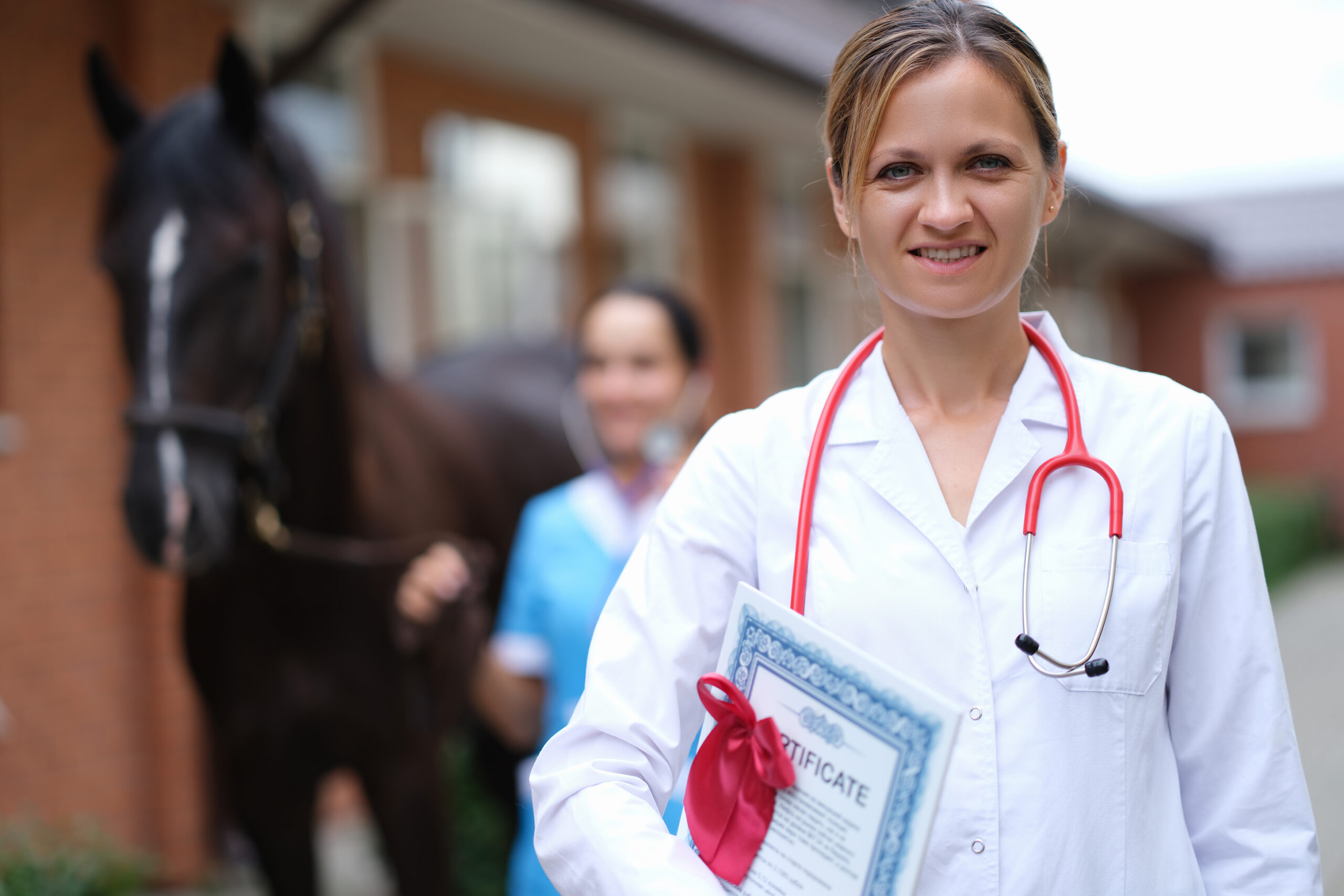
Leading veterinary postgraduate education provider Improve Veterinary Education is launching two “reimagined” programmes: the Online Small Animal Medicine Certificate programme and the Blended Soft Tissue Surgery programme. They represent a methodological shift designed to create high-impact training courses that prepare vets for the difficulties of modern veterinary medicine.
To find out more, we interviewed Pablo Gomez, DVM, MSc, PhD, head of educational content at Improve Veterinary Education, one of the team behind the redesign, about what’s changing – and why.
Let’s get straight to it, Pablo: what inspired you and the team to rethink the way these certificate programmes are delivered?
I’ve been passionate about transforming education since I taught my very first university class in 2003. That moment sparked a lifelong commitment to helping learners not only acquire knowledge but truly be able to use it in practice. Since then, I’ve been searching for more effective, engaging ways to teach. I’ve been teaching online since 2008, and in those 17 years, I’ve helped many learners improve their skills.
We wanted to design something that […] doesn’t just pass on information, but transforms the way vets think and act from the very first day of the course
Even so, I also noticed that most education providers haven’t changed their course design much over that time. Courses are still often based on university teaching, 50-minute lectures are common and learning is often passive, with the student taking responsibility for note taking and trying to apply their learning.
This is something I’ve seen consistently, not only in veterinary CPD but across many disciplines. At Improve Veterinary Education, we pioneered modular course design and integrated a variety of interactive activities, but with these new programmes, we saw the opportunity to take that commitment to the next level. We wanted to design something that reflects the way modern professionals actually learn, work and solve problems, something that doesn’t just pass on information, but transforms the way vets think and act from the very first day of the course.
From your perspective, what are the biggest changes delegates will notice?
I think there are three major shifts our delegates will notice immediately.
The first is modularity and a complete change in structure. We’ve moved away from the traditional systems-based approach and adopted problem-oriented learning. Each module starts with a real-life clinical presentation, like polyuria-polydipsia (PUPD), and works through it exactly as vets do in practice, even when that crosses multiple body systems. This makes the learning directly relevant from day one and easier to apply in the clinic. We’ve also divided lectures into shorter, more focused segments so learners can absorb, revisit and use the knowledge on the go.
The second is personalised, private feedback. Here, every structured activity is reviewed, and each learner receives tailored, confidential guidance. This means no one learns in isolation, everyone knows where they stand and feedback arrives in time to make a difference. It’s about keeping students engaged, supported and moving forward with confidence.
The third is the introduction of active learning activities (ALAs), inspired by training methods used in high-stakes professions like aviation, space exploration and emergency medicine. These activities, such as error-management training, visual synthesis challenges and clinical decision-making under pressure, are designed to replicate real-world demands in a safe learning environment. They help learners sharpen their thinking, improve situational awareness and build the resilience needed for modern veterinary practice.
Together, these three shifts create a learning experience that goes far beyond traditional online education, combining relevance, guidance and high-impact training to prepare vets for the realities of today’s clinical world.
How do these updates reflect the realities of veterinary practice today?
Learners don’t just study medicine, they develop the mindset, awareness and interpersonal skills needed to stay effective and healthy in the long term
Contemporary veterinary medicine, especially in clinical settings, has evolved into a high-pressure environment where decisions must be made quickly, accurately and often under conditions of uncertainty, limited resources and emotional intensity. The stakes are high: a single mistake can compromise a patient’s life, erode client trust or destabilise a team. On top of that, our profession faces some of the highest levels of stress, burnout and even suicide among healthcare fields.
Yet despite these realities, traditional veterinary education rarely provides systematic training in the skills that are essential to thriving in practice, like active listening, empathy, resilience, conflict management and effective communication under pressure. We believe these are not “soft” skills, but core clinical competencies that directly impact patient outcomes and team well-being.
That’s why, alongside the medical content, we’ve built a dedicated module co-designed by experienced clinical veterinarians and professional psychologists. This module addresses the human side of veterinary practice, combining evidence-based psychological tools with real-world clinical scenarios. Learners don’t just study medicine, they develop the mindset, awareness and interpersonal skills needed to stay effective and healthy in the long term.
The active learning activities threaded throughout the programmes, from decision-making under pressure to structured error analysis, reinforce these abilities, helping delegates become not just better clinicians, but more resilient, empathetic and confident professionals.
We’ve heard a lot about the new emphasis on applied or “active” learning. Can you explain what that looks like in practice?
Sitting and being fed information – “passive” learning – is going to be history. It should have been history a long time ago, but now, having content instantly accessible to everyone has exposed the real differentiator in education: methodology and the learner’s own effort.
In this new reality, simply providing information is no longer enough. What matters is how we make learners work with that information, how we train them to think critically, to apply knowledge under pressure and to adapt to complex, evolving situations. That is why these programmes integrate a robust set of ALAs, each grounded in solid academic research.

‘Reverse engineering of a clinical case’ starts from the final diagnosis and retraces the reasoning to identify the critical moments where everything could have changed
Among them, “error-management training” exposes students to clinical scenarios where mistakes are expected, encouraging reflection and resilience (Figure 1). “Reverse engineering of a clinical case” starts from the final diagnosis and retraces the reasoning to identify the critical moments where everything could have changed (Figure 2). “Human vs AI – what silicon doesn’t know” pushes learners to evaluate when to trust algorithmic recommendations and when to rely on clinical intuition. “Consensus and controversies” develops the skill of dissecting guidelines and literature, identifying grey areas and building evidence-based arguments. The visual synthesis challenge asks learners to construct decision trees or concept maps from scratch, revealing how they organise and connect their knowledge before comparing it with an expert reference.
All of these activities have a shared goal: to break the passive learning cycle and replace it with deliberate, guided practice that demands engagement, effort and reflection. Over the coming weeks, we will be unveiling each of these activities in detail, showing why they are such a transformative step forward in online veterinary education.
Were there any influences or industries outside veterinary medicine that shaped your thinking?
As soon as we started thinking about changing our methodology, we looked beyond veterinary medicine to see how other professions train for excellence. The closest parallel was human medicine, where problem-oriented learning has gained significant recognition as a superior approach. But we didn’t stop there. We explored the worlds of aviation, space exploration and firefighting – high-stakes professions where precision, resilience and sound decision-making are vital.
From NASA we learned about error-management training and the value of preparing for mistakes before they happen: “Error is inevitable; harm is not”. Air traffic controllers inspired us with their ability to make decisions in real-time while maintaining situational awareness. Elite firefighting teams showed us how to coordinate under extreme pressure, and computer engineers taught us the principles of reverse engineering to deconstruct complex problems.
We have adapted these methods to the veterinary context, creating activities that challenge learners to think strategically, manage uncertainty and make decisions with clarity and confidence. The result is a learning experience that mirrors the demands of real practice, ensuring that when the stakes are high, our alumni are ready.

How do you think these changes will impact a vet’s day-to-day confidence in practice?
Everything in these programmes is designed so that delegates can start applying what they learn the very next day in practice. From downloadable practical tools and checklists to personalised feedback, we’re expecting delegates to quickly develop their skills and confidence, guided by course directors and speakers who are all top-level clinicians with extensive experience.
Everything in these programmes is designed so that delegates can start applying what they learn the very next day in practice
We also have an extra, final module, the art of consultation, dedicated to developing skills like communication, empathy and conflict management.
Put all of that together, and I honestly cannot think of a course with content more immediately applicable to daily veterinary practice. Every concept, every skill, every tool, ready for the next patient you see.
If you could give one piece of advice to a vet considering postgraduate study right now, what would it be?
If you’re thinking about starting a postgraduate programme, my advice would be to choose one that truly excites you, and be honest with yourself about how you learn best. Staying engaged and motivated over time is essential, and that’s where interactive tools like ALAs can make a real difference. They help you reflect, apply knowledge and stay connected to your progress.
And having the support to ask questions and the guidance of experienced clinicians who are truly passionate about education can make all the difference when you’re trying to grow, stay focused and apply what you learn in real life.
Thanks, Pablo! Any final words?
After months of extraordinary creative work and a relentless drive to reinvent veterinary education, we are ready to share something truly different. I hope every vet with a passion for clinical excellence gets to feel what it’s like when education doesn’t just inform you, it transforms you.
Pablo – thank you for your time. We can’t wait to see these programmes start in the autumn and look forward to hearing from the delegates about their experiences soon!
You can find out more about the latest programmes here.